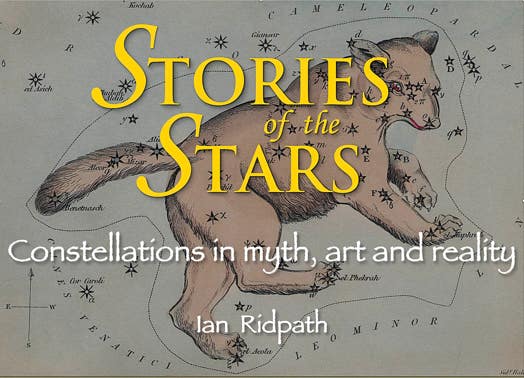
Stories of the stars
Constellations in myth, art, and reality
Every night, a pageant of Greek mythology is enacted among the stars. Perseus flies to the rescue of princess Andromeda, mighty Orion faces the charge of Taurus the bull, the herdsman Boötes chases the Great Bear around the celestial pole, and the god Zeus flies along the Milky Way in the guise of a swan. This talk will recount these famous legends, illustrated by classic works of art, and identify the constellations associated with them. Using images from the world’s most powerful telescopes, we will look in more detail at some of the fabulous objects that modern astronomers have discovered in those same areas of sky, from the birthplaces of stars to black holes and distant galaxies, which tell real-life stories that are every bit as fantastic as the ancient myths.
Running time: 45 minutes.
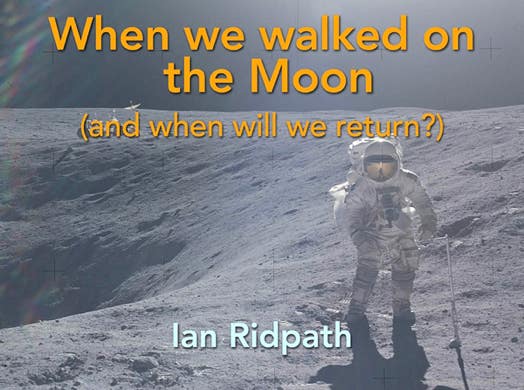
When we walked on the Moon
And when will we return?
The Moon is our nearest neighbour in space, and still the only body beyond Earth on which humans have set foot. This talk will introduce the main features of the Moon that can be seen with binoculars and small telescopes, from its ancient plains of solidified lava to craters the size of cities blasted out by meteorite impacts. We then trace the history of lunar exploration in the context of the East–West political rivalry of the time, from the first space probes to the Apollo landings. The talk summarizes the scientific findings from those missions and describes why astronomers now think that the Moon was born when another body hit the Earth billions of years ago. Finally we will look ahead at plans for returning to the Moon including NASA’s new Artemis programme.
Running time: 45 minutes.
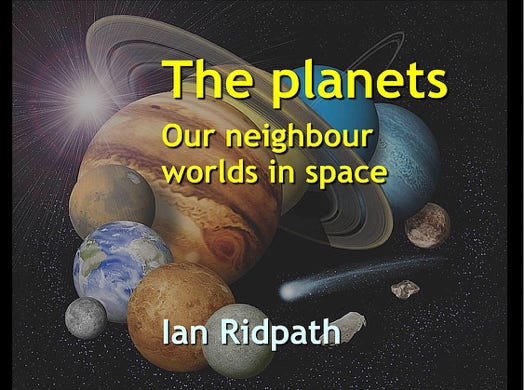
The planets
Our neighbour worlds in space
Our home world, the Earth, is one of a family of eight major planets orbiting an average star, the Sun, and is the only one known to harbour life. Copiously illustrated with stunning pictures from space probes, this talk will outline what we have discovered about our neighbour worlds. Starting with tiny Mercury closest to the Sun, we will travel out via hothouse Venus to the red planet Mars, then through the asteroid belt into the realm of the gaseous giants Jupiter, Saturn, Uranus, and Neptune, including their rings and multiple moons. The talk will include the latest pictures from distant Pluto and will explain why it is no longer considered a planet. The talk will end with a look at searches for planets around other stars.
Running time: 45 minutes.
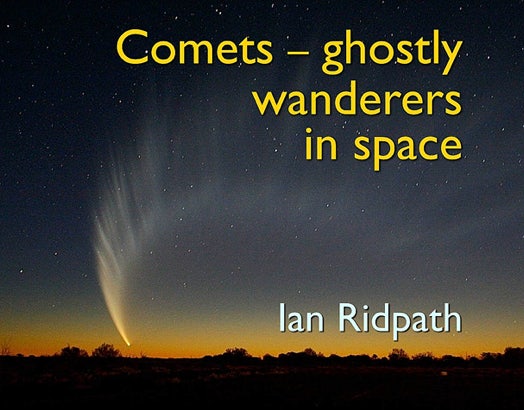
Comets
Ghostly wanderers in space
Comets appear in our skies from time to time like ghostly apparitions. In the past they were regarded as omens of disease, death, and destruction. Now we know that countless billions of them exist in the form of dirty snowballs at the edge of our Solar System, remnants from the formation of the Earth and other planets. We see them only on the rare occasions when they approach the Sun and heat up, releasing gas and dust to form a glowing head and tail. Recent space probe missions to comets have given us astounding close-up pictures and first-hand information on their composition and structure. This talk will explain scientists’ efforts to understand where comets come from, what they are made of, how they were formed, and their possible role in the origin and development of life on Earth.
Running time: 45 minutes.
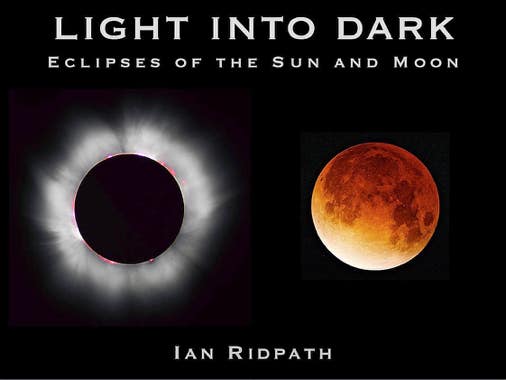
Light into dark
Eclipses of the Sun and Moon
Eclipses of the Sun and Moon are among the most awe-inspiring natural phenomena. Most spectacular of all are total solar eclipses, when the Sun’s brilliant disk is completely obscured for a few minutes, turning daytime into darkness and bringing into view its faint outer halo of gas, the corona. At lunar eclipses, the Moon turns blood red at night for an hour or more as it passes through the Earth’s shadow. Find out what causes these rare events, what you can expect to see, and why enthusiasts travel around the world to experience the precious few minutes of totality at solar eclipses. The talk concludes with reports and pictures of recent and forthcoming eclipses.
Running time: 45 minutes.
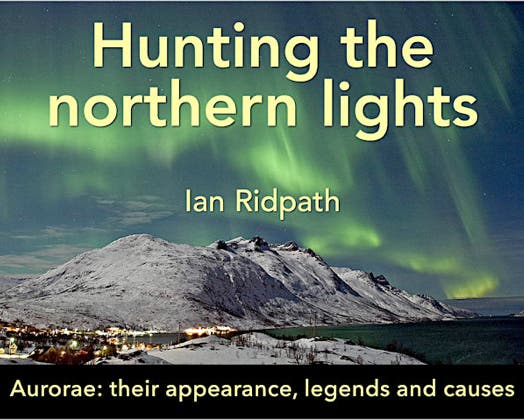
Hunting the northern lights
Aurorae: Their appearance, legends, and causes
Aurorae, popularly known as the northern lights, are one of the wonders of the natural world. Long the subject of Nordic legend, they are now known to be triggered by atomic particles flowing from the Sun. Accelerated by the Earth’s magnetic field, these particles cascade onto the upper atmosphere around the poles, causing it to glow green and red. This talk describes what aurorae look like, the legends and superstitions associated with them, how and where they occur, and how to watch for them. Inspired by TV programmes such as Joanna Lumley’s, many from around the world are now venturing to Norway to see these natural wonders for themselves. This talk has been developed specially to introduce the astounding northern lights to this new generation of tourists.
Running time: 45 minutes.
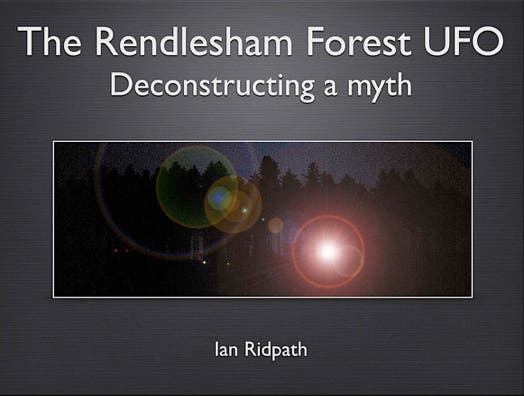
The Rendlesham Forest UFO
Deconstructing a myth
The Rendlesham Forest UFO incident of December 1980 ranks as one of the top ten UFO cases in the world as voted by UFO believers, and is often described as the ‘British Roswell’. Evidence for a series of sightings spread over two nights includes eye-witness statements from security guards at the US Air Force base near Woodbridge in Suffolk, a memo from a high-ranking USAF officer to the UK’s Ministry of Defence, and a real-time tape recording of events as they unfolded. This talk looks at the main points of the case and explains how the witnesses were fooled by a series of natural and man-made objects. The Rendlesham case is an instructive demonstration that UFO sightings can never be taken at face value no matter how reliable the witnesses may seem. My full investigation can be found here.
Warning: Unsuitable for UFO believers!
Running time: 45 minutes.
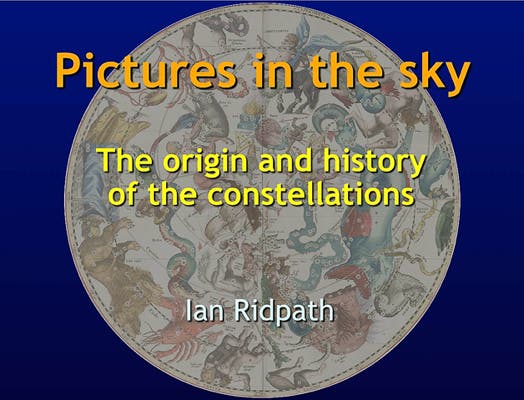
Pictures in the sky
The origin and history of the constellations
In the days before writing, storytellers used the sky as a picture book to illustrate their tales of gods, mythical heroes and fabulous beasts. Those pictures among the stars were the origin of our system of constellations. Today, the entire sky is divided into 88 constellations of varying shapes and sizes. This talk, which includes illustrations from some of the world’s greatest star atlases, will trace the origin of the constellation system back to Greek times and explain who filled in the gaps between the ancient Greek figures, who decided on the official boundaries between constellations, and how the names of certain stars came about.
Running time: 45 minutes. No sound