Sir George Biddell Airy (1801–92)
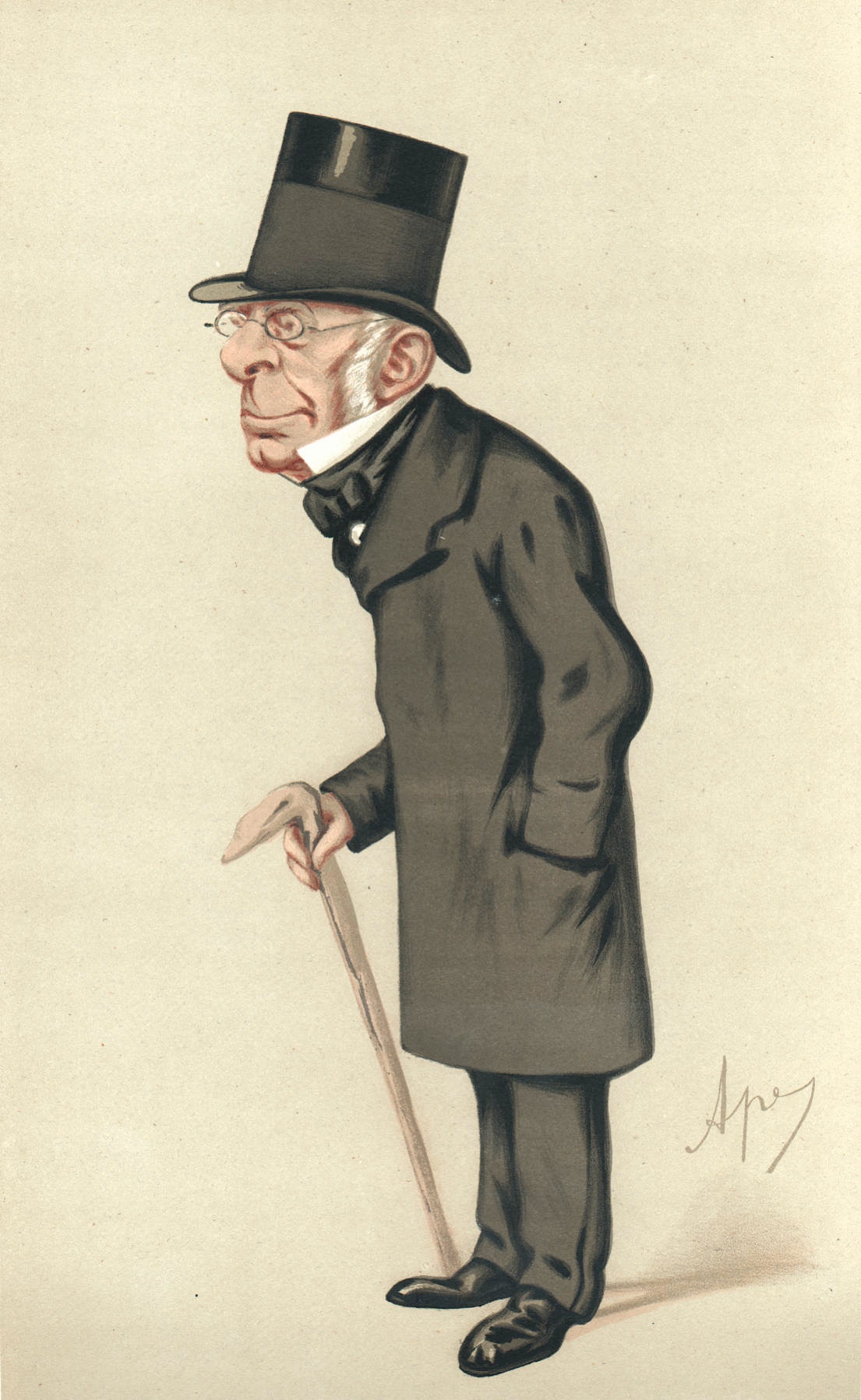
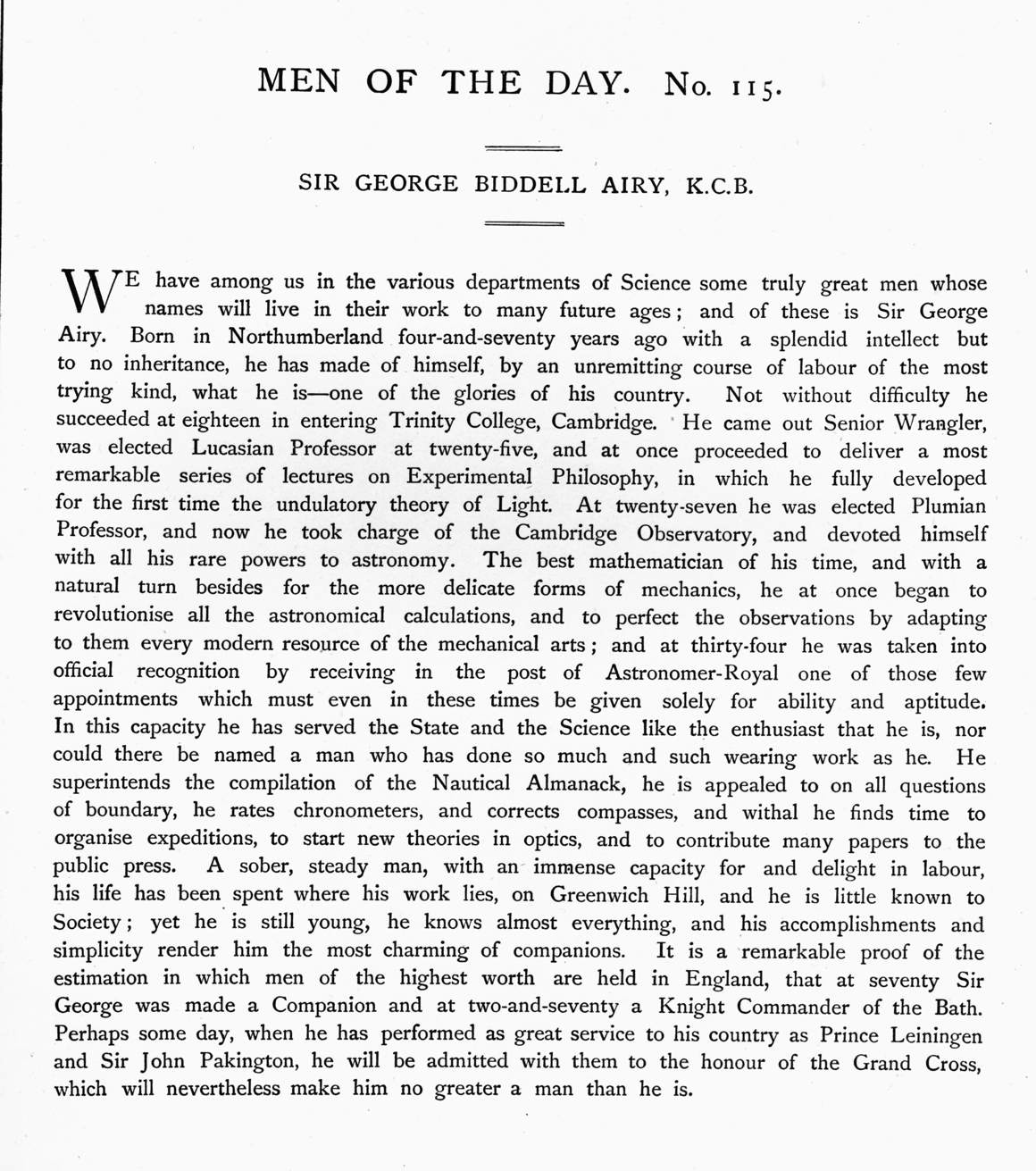
George B. Airy became director of the Royal Observatory at Greenwich, with the associated title of Astronomer Royal, in 1835 when he was 34, and held the post until his retirement in 1881 at the age of 80.
At Greenwich he designed and installed the famous transit circle now named after him, used for timing the passage of stars across the meridian. It is the position of the Airy transit circle that defines the Greenwich meridian and since 1884 that meridian has been the basis of the world’s timekeeping and navigation. Hence Airy can be said to have brought the world’s clocks into step.
As well as his astronomical duties Airy was widely consulted by the British government on various scientific matters and was the leading government scientist of the day. He was knighted in 1872.
One additional contribution: in 1825 Airy designed the first eyeglasses to correct for astigmatism, from which he suffered. As someone with the same defect, I am indebted.
For obituaries of Airy see Monthly Notices of the Royal Astronomical Society, vol. 52, p. 212 (1892) and The Observatory, vol. 15, p. 74 (1892).
This caricature is by Ape, real name Carlo Pellegrini (1838–89), an Italian artist who produced the first Vanity Fair caricatures and established the magazine’s style. It was published in Vanity Fair on 1875 November 13 when Airy was aged 74.
◄ Return to Antique Star Atlases